Psychosocial hazards are parts of how work is designed and managed, the work environment and workplace interactions that can cause psychological or physical harm. Employers must manage them like any other WHS risk, and in NSW must follow the approved code of practice or achieve an equivalent or higher standard. We provide training, templates and advice to help.
Find what you need
Choose what you need.
What are psychosocial hazards?
Psychosocial hazards are aspects of how work is designed and managed, the work environment and workplace interactions that can cause psychological or physical harm. Common examples are:
- high or low job demands, and low job control
- poor support, unclear roles and poorly managed change
- inadequate recognition and poor workplace relationships
- remote or isolated work, and poor physical environments
- traumatic events, violence and aggression
- bullying, and harassment including sexual harassment
The hazard is in the work, not in the person. Two people doing the same job carry the same exposure. So the answer is to change the work, not to ask people to cope better.
What the law expects
- Every PCBU has a duty. Under WHS laws, a person conducting a business or undertaking must eliminate psychosocial risks, or if that is not reasonably practicable, minimise them so far as is reasonably practicable. The WHS Regulations and the Code of Practice: Managing psychosocial hazards at work set out how.
- In NSW, follow the code or do better. Since 1 July 2026, section 26A of the NSW Work Health and Safety Act 2011 requires a PCBU to comply with an approved code of practice, or manage the risk in another way that gives an equivalent or higher standard of health and safety.
- Consult your workers. Workers and health and safety representatives must be consulted when you identify hazards, assess risks and decide on controls.
- Apply the hierarchy of control. In most states and territories, the WHS Regulations require you to work down the hierarchy of control measures for psychosocial risks: eliminate the risk if you can, and otherwise change the work itself before relying on rules, procedures and training.
- Prevent sexual harassment. Under section 47C of the Sex Discrimination Act 1984 (Cth), employers and PCBUs must take reasonable and proportionate measures to eliminate sexual harassment, sex discrimination and related conduct, as far as possible. This applies in every state and territory.
- Queensland. Approved codes of practice must be followed, or an equivalent or higher standard achieved, since 1 July 2018, and a written prevention plan for sexual harassment is required.
- Victoria. Victoria has its own OHS laws, and its psychological health regulations commenced on 1 December 2025.
- Other states and territories. In WA, a psychological injury can be a notifiable incident, and mines have their own regulations. In the ACT, a workplace sexual assault is a notifiable incident. South Australia, Tasmania and the Northern Territory have approved codes on psychosocial hazards and on sexual and gender-based harassment. Check the rules where you operate.
Read more: What SafeWork NSW inspectors check and NSW codes of practice now carry legal weight.
Five steps to manage psychosocial risk
Manage it inside your WHS management system, not as a separate wellbeing program. Consult workers and HSRs at every step.
- Identify the hazards in the work. Use consultation, surveys, focus groups, incident and complaint data, and what you see of how work is really done.
- Assess the exposure. Rate each hazard by frequency (how often), intensity (how strong), duration (how long) and interaction (how hazards combine). Assess by role, not by person.
- Control it at the source (Prevent). Eliminate the hazard if you can. If not, minimise it by changing how work is designed, resourced and managed, working down the hierarchy of control measures, so changes to the work come before rules, procedures and training. Training and support services help, but they do not control the hazard.
- Act early and support recovery (Respond and Recover). Make it easy to raise a concern, act on it quickly, and support people back to safe work.
- Check the controls work (Review). Test that controls are in place and effective, keep records, and fix what has failed.
These steps follow our Control Model: Prevent, Respond, Recover, Review.
Don't know where to start?
| You are | Start with |
|---|---|
| A worker | The free Psychosocial Hazard Awareness online course, or a toolbox talk run by your supervisor. |
| A supervisor or manager | The free Psychosocial Hazards for Leaders online course, then in-person leader training or the Leadership package. |
| In WHS, HR or risk | The Practitioner package and the Implementation Toolkit. Add the management plan for your state or territory: NSW or Victoria, Queensland, WA, SA, Tasmania, the ACT, the NT or Comcare. |
| An executive or board member | The Executive Psychosocial Risk Governance package, or a session delivered by us. |
| A small business owner | The psychosocial risk management plan for your state or territory (NSW, Victoria, Queensland, WA, SA, Tasmania, the ACT, the NT or Comcare), a toolbox talk for your team and the free online courses. |
| Training a whole organisation | The Complete Training & Implementation Bundle, or in-house training delivered by us. |
Train your team in person
We run psychosocial training for leaders, HSRs and workers as public courses and in-house for your organisation, in person or live online. In-house training is built around your work and your hazards.Ask about in-house training See course dates
Related courses we run
Support skills help people after they have been exposed. They matter, but they do not replace controls that change the work.
Learn online
Free, self-paced courses with a certificate when you finish.All psychosocial online courses
Deliver it yourself: training packages
Buy a package once, deliver it to your own people and use it again and again. Each package covers one level.Management plans and toolbox talks
Editable Word and Excel templates, written to each state's laws. Each has the plan and policy, tools to identify and assess the hazards, a risk register, procedures for reports and incidents, and a way to check it is working.
Psychosocial toolbox talks
Short, ready-to-run talks for team meetings and pre-starts.
All management plans All documents and templates All toolbox talks
The Psychosocial Risk Series
Six practical books for leaders, HR professionals and risk practitioners who need to manage psychosocial risk as a work risk, not only a wellbeing issue. Each book stands on its own. Available in Kindle and paperback.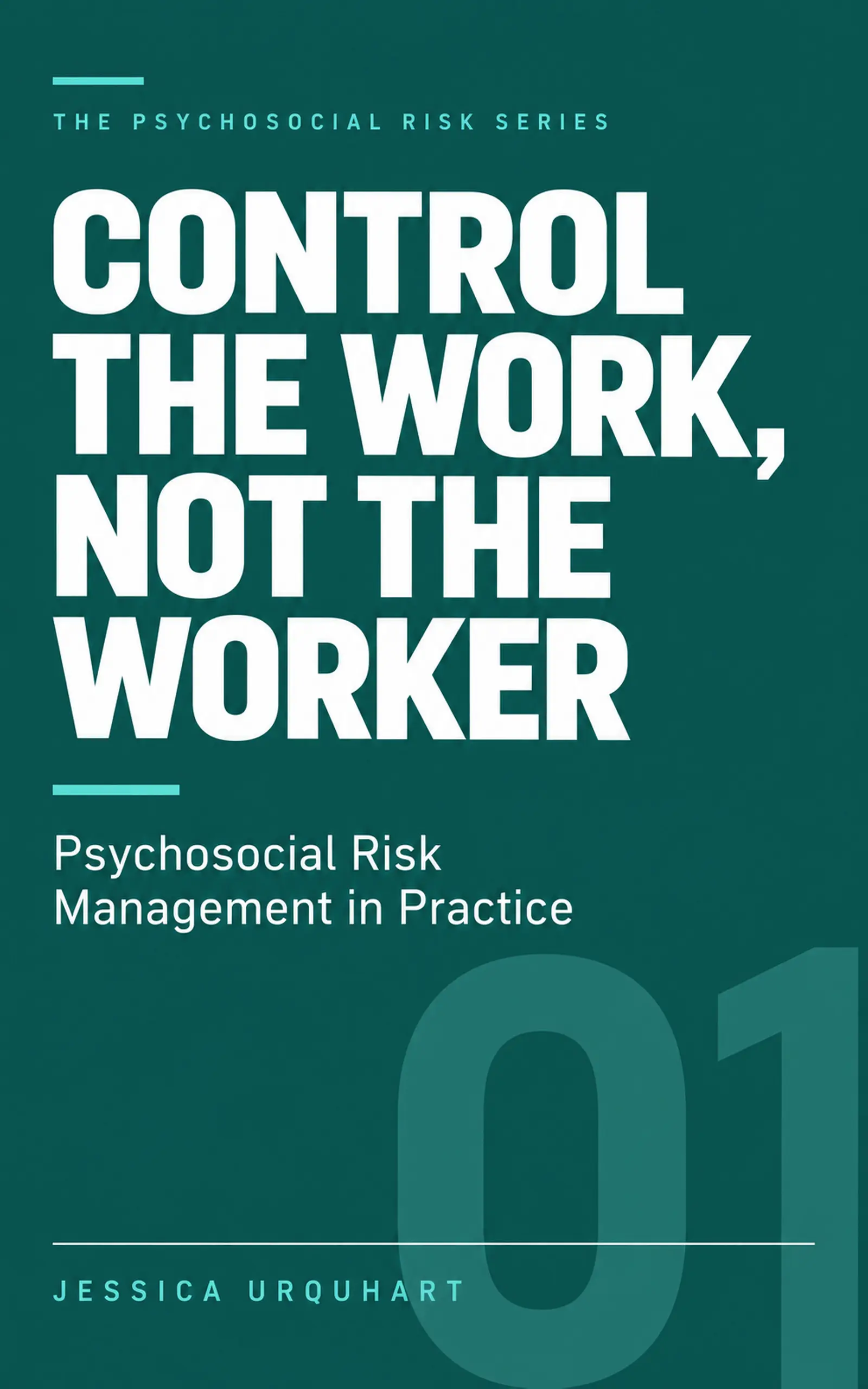 Control the Work, Not the Worker
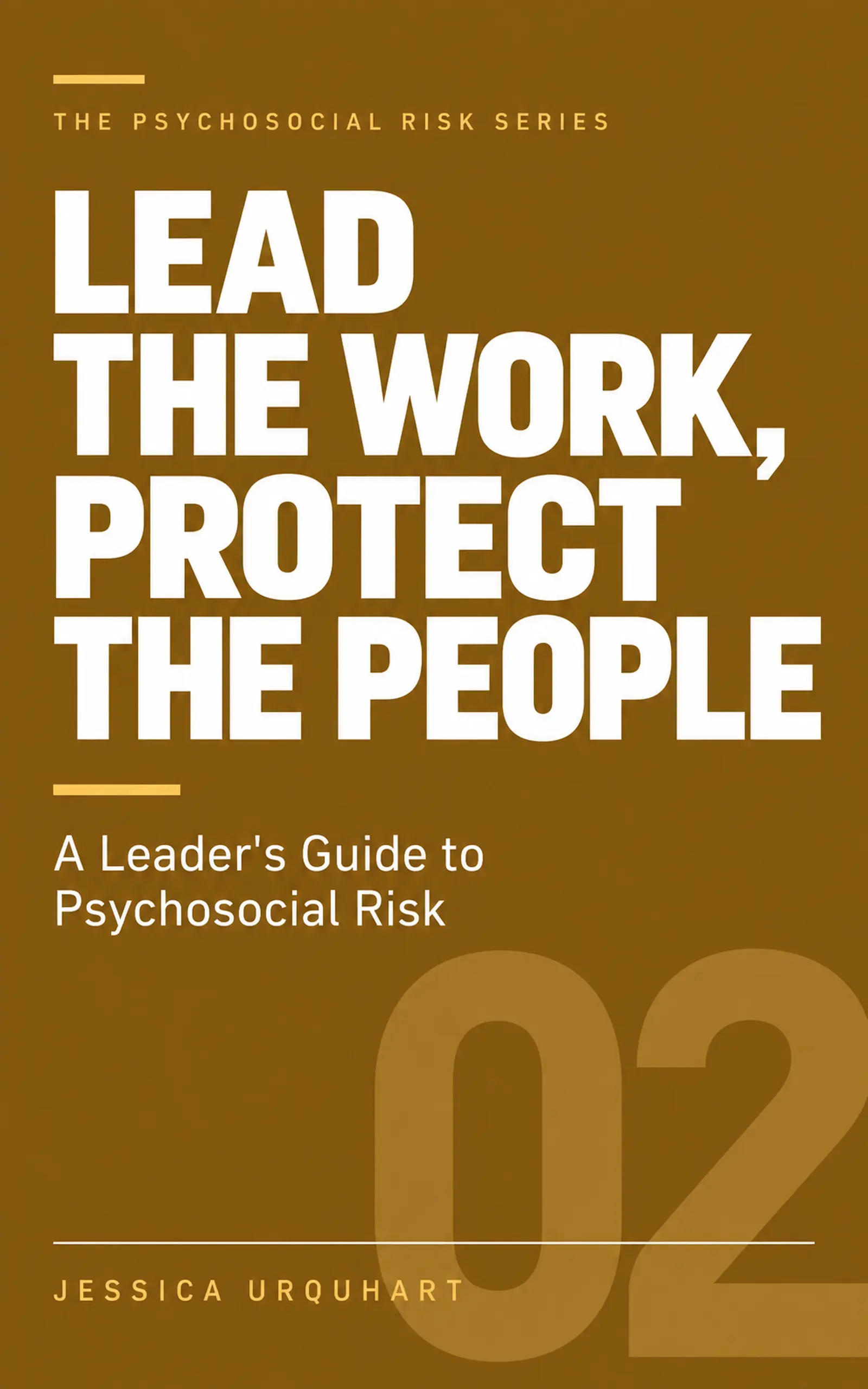 Lead the Work, Protect the People
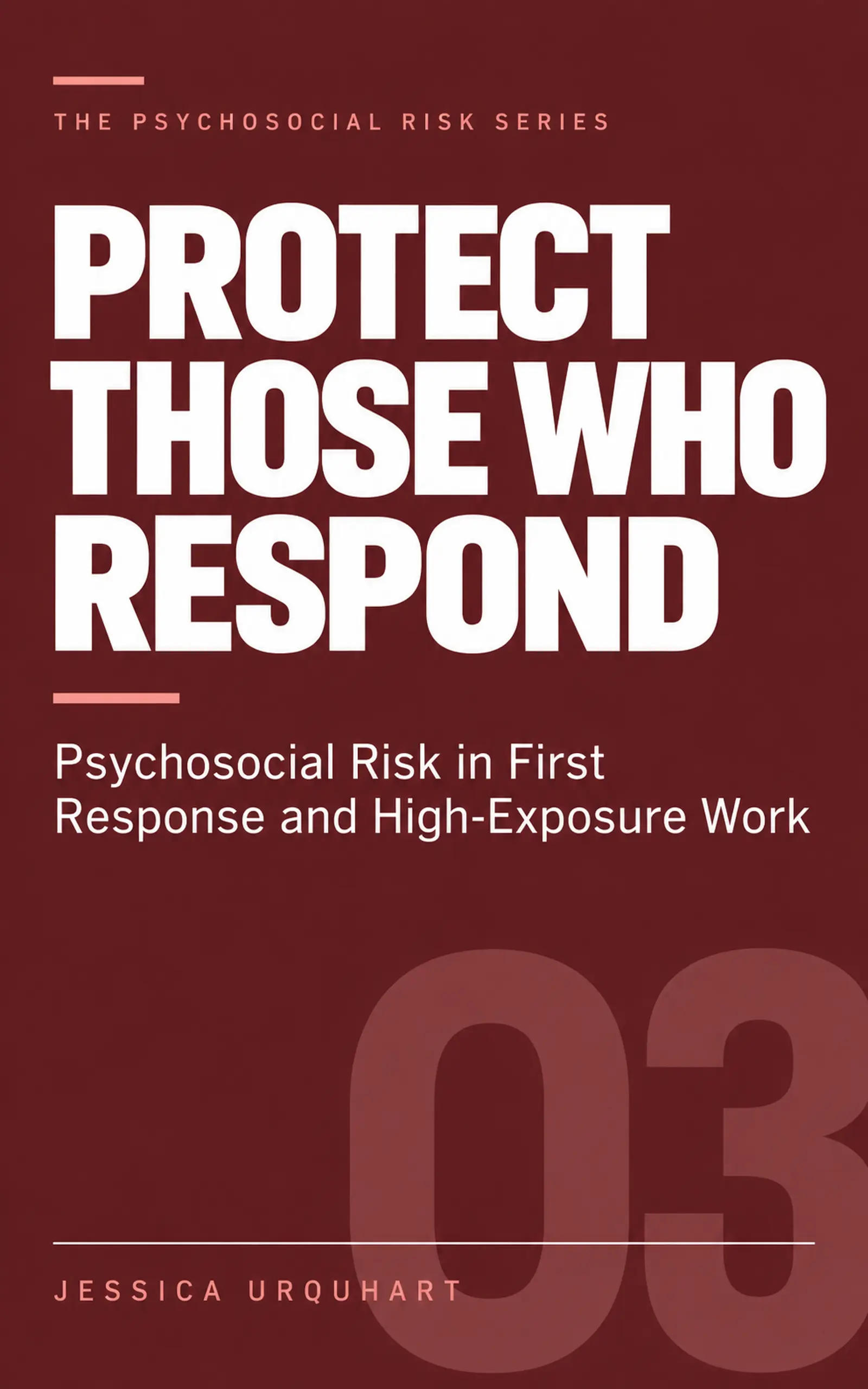 Protect Those Who Respond
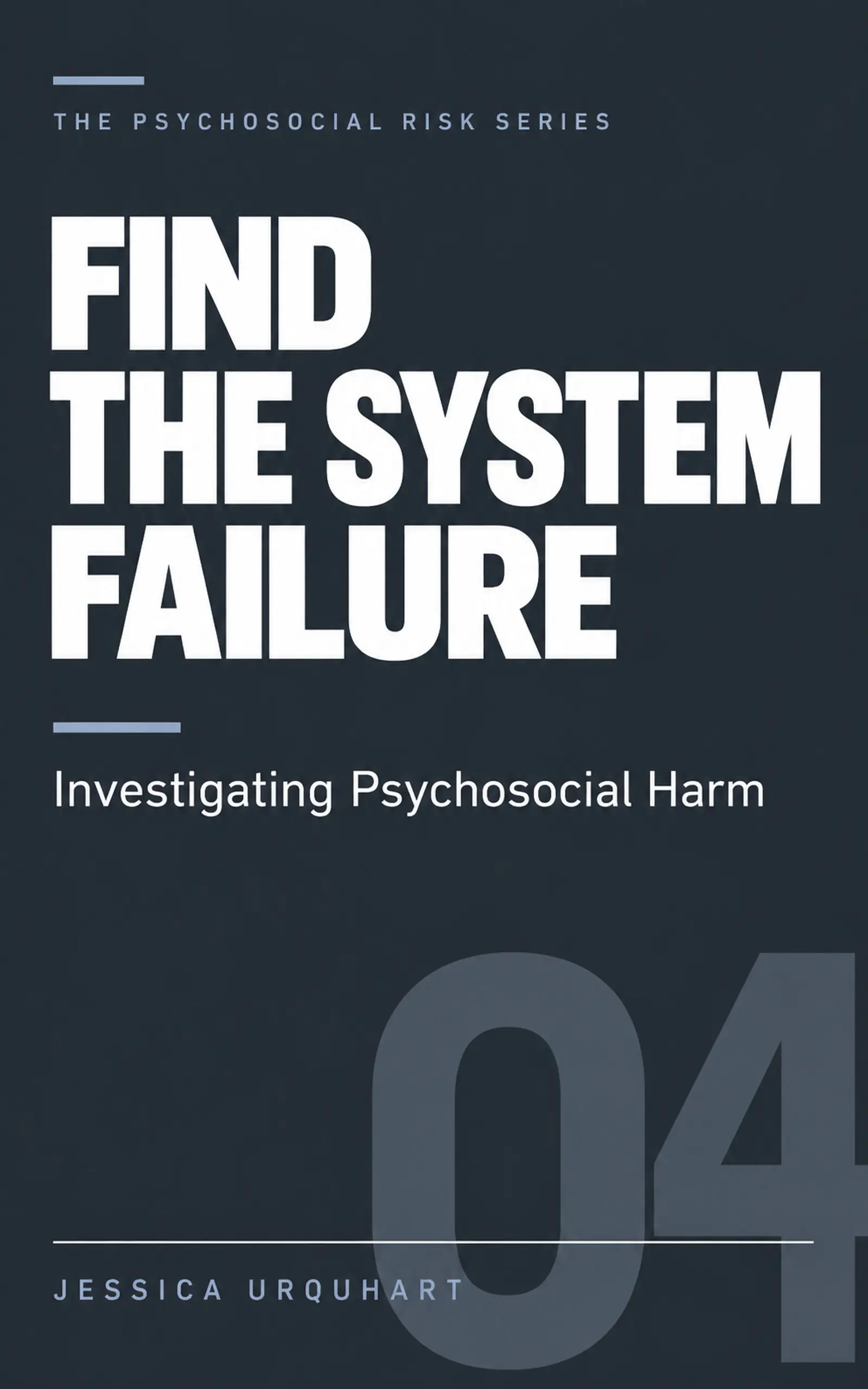 Find the System Failure
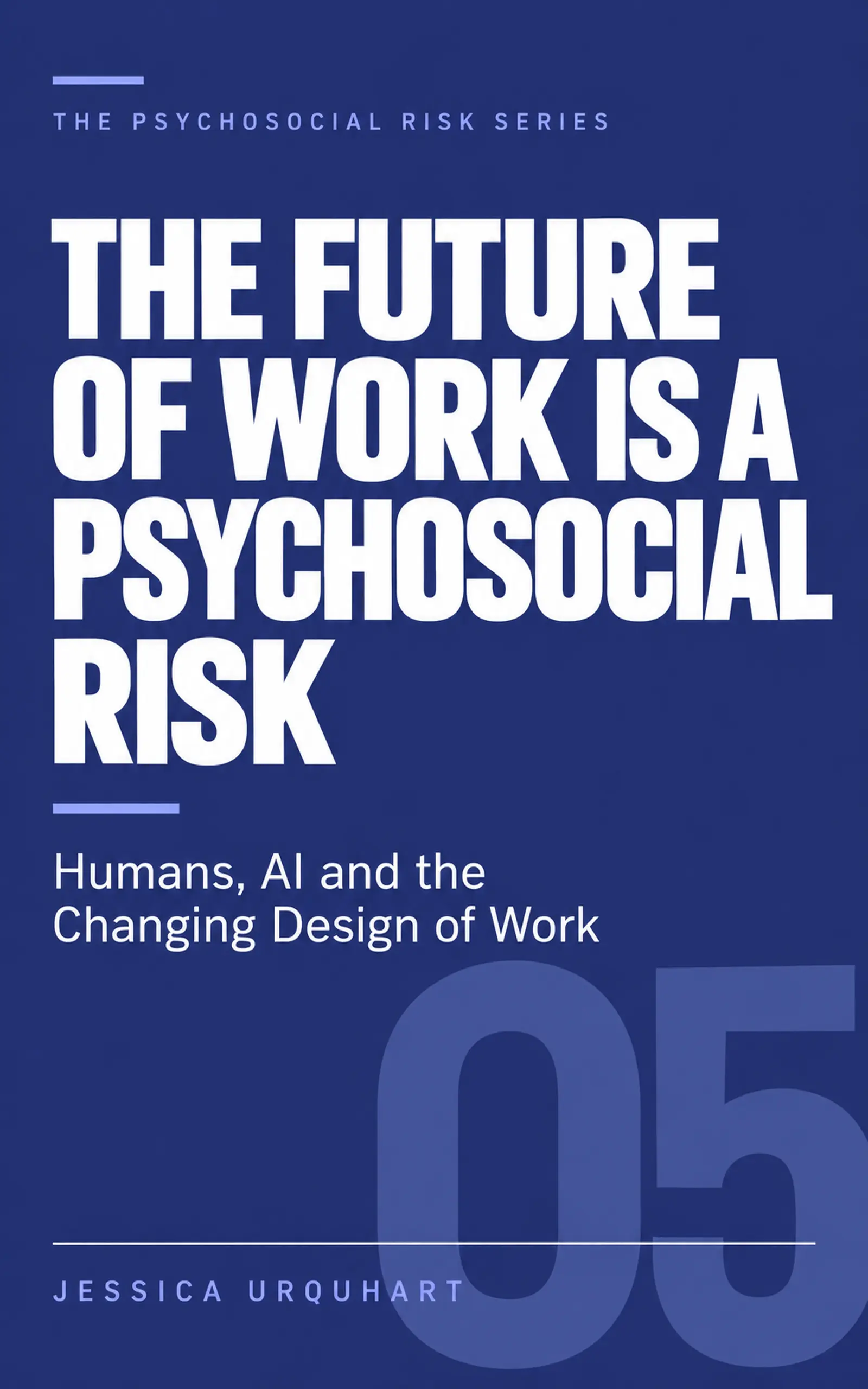 The Future of Work is a Psychosocial Risk
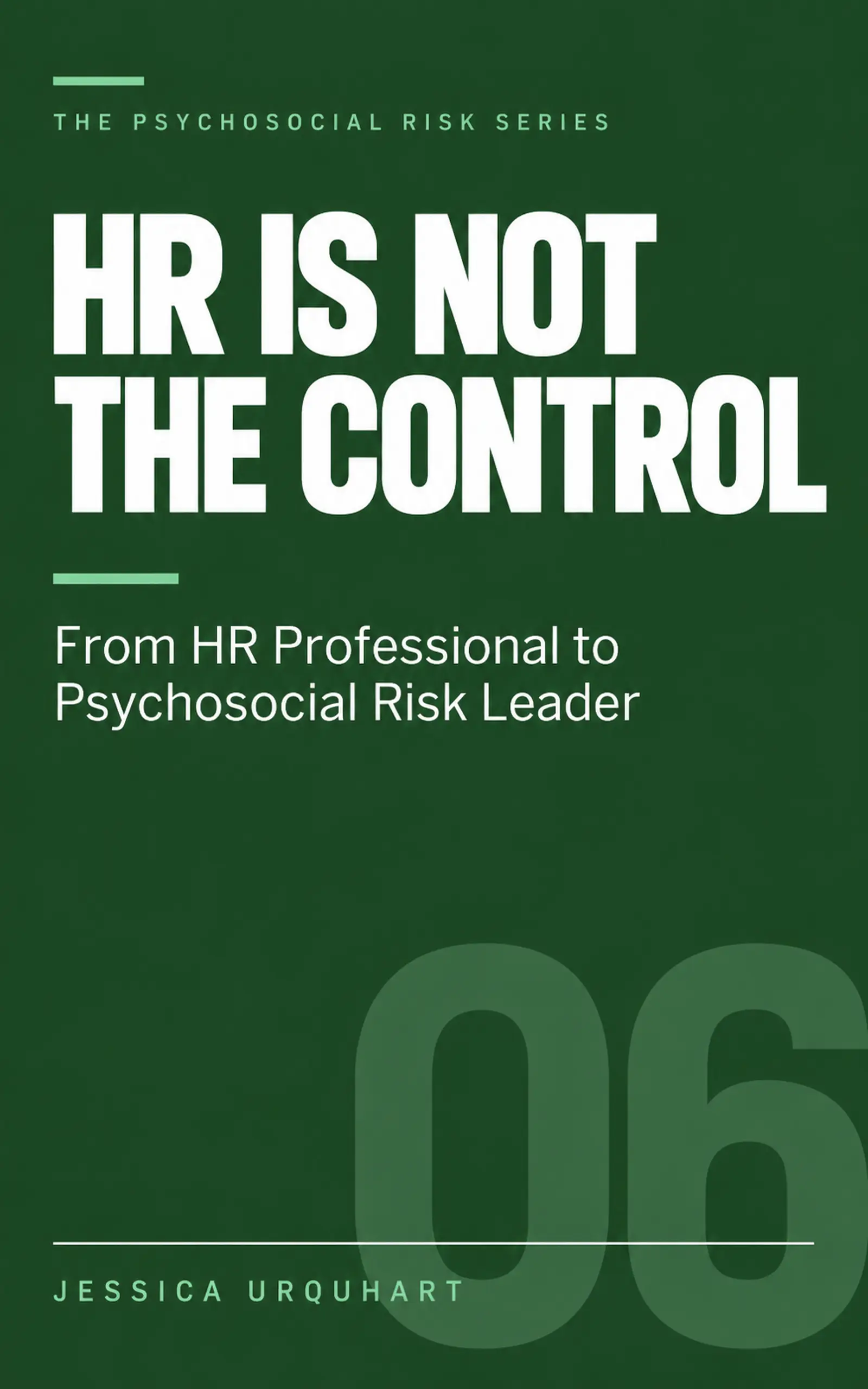 HR is Not the Control
Frequently asked questions
What are psychosocial hazards?
Psychosocial hazards are aspects of how work is designed and managed, the work environment and workplace interactions that can cause psychological or physical harm. Examples are high job demands, low job control, poor support, unclear roles, poorly managed change, remote or isolated work, traumatic events, violence and aggression, bullying, and harassment including sexual harassment.
What is psychosocial risk?
Psychosocial risk is the chance that exposure to a psychosocial hazard causes harm. It depends on how often people are exposed, how intense and how long the exposure is, and how hazards combine. The harm can be psychological, such as anxiety or depression, or physical, such as injury.
Do employers have to manage psychosocial risks?
Yes. Under WHS laws, a person conducting a business or undertaking (PCBU) must eliminate psychosocial risks, or if that is not reasonably practicable, minimise them so far as is reasonably practicable. The WHS Regulations and the Code of Practice: Managing psychosocial hazards at work set out how.
What are the rules in NSW?
Since 1 July 2026, section 26A of the NSW Work Health and Safety Act 2011 requires a PCBU to comply with an approved code of practice, or manage the risk in another way that gives an equivalent or higher standard of health and safety. For psychosocial hazards, that is the Code of Practice: Managing psychosocial hazards at work. An inspector can issue an improvement notice if you cannot show your approach is at least as good as the code.
What about the other states and territories?
Victoria has its own OHS laws, and its psychological health regulations commenced on 1 December 2025. Queensland's WHS regulation has specific provisions on psychosocial risks, including a written prevention plan for sexual harassment, and a code of practice that businesses must follow or better (since 1 July 2018). WA's regulations have psychosocial provisions too, a psychological injury can be a notifiable incident, and mines and petroleum operations have their own regulations. South Australia's regulations have psychosocial provisions, and SafeWork SA's codes on psychosocial hazards and on sexual and gender-based harassment commenced on 19 February 2026. Tasmania has psychosocial provisions in its regulations, and approved codes on psychosocial hazards (from 4 January 2023) and on sexual and gender-based harassment (from 19 June 2024). In the ACT, a workplace sexual assault is a notifiable incident. The Northern Territory's psychosocial regulations commenced on 1 July 2023, and its codes on psychosocial hazards and on sexual and gender-based harassment took effect on 23 May 2024. Commonwealth agencies, and other workplaces under the Commonwealth WHS laws, are regulated by Comcare, whose psychosocial regulations commenced on 1 April 2023. The core expectation is the same everywhere: identify the hazards, assess the risk, control it and check the controls work.
Is an employee assistance program (EAP) a control for psychosocial risk?
Not on its own. An EAP and other support services help people after they have been exposed, but they do not change the work that caused the exposure. The main controls change how work is designed, resourced and managed, following the hierarchy of controls.
Is mental health training a control for psychosocial hazards?
No. Mental Health First Aid, Psychological First Aid and peer support build valuable support skills, but they act after exposure. Controls change the work itself, such as workloads, rosters, role clarity, staffing and how conflict is managed.
How do I do a psychosocial risk assessment?
Consult workers and HSRs, identify the hazards in each role, and rate the exposure by frequency, intensity, duration and how hazards interact. Then look at the controls you already have, decide whether they are enough, and choose new controls that change the work. Our Implementation Toolkit has worksheets for each step.
What should a psychosocial risk register include?
Each hazard, the roles and tasks exposed, how the exposure was rated, the controls in place, who owns each control, how and when each control is checked, open actions, and the date of the next review. Note where workers and HSRs were consulted.
How often should we review psychosocial risks and controls?
Review them on a set schedule, and also when something changes: a restructure, new work or systems, a complaint or incident, a request from a worker or HSR, or evidence that a control is not working. If a control has failed, do not wait for the next scheduled review.
Who is responsible for managing psychosocial risk?
The PCBU holds the duty. Officers, such as directors and senior managers, must exercise due diligence to make sure the PCBU complies. Managers and supervisors put controls in place day to day, and workers must take reasonable care and follow reasonable instructions.
What is your Control Model?
Our Control Model organises psychosocial risk controls by when they act: Prevent stops exposure at the source, Respond detects and acts early, Recover limits harm and restores people, and Review checks the controls are working. It is used across our training packages and toolkit.
What training do managers and supervisors need?
Managers need to know how work design creates exposure, how to respond when someone raises a concern, and how to check that controls are working. Start with the free Psychosocial Hazards for Leaders online course, then in-person leader training or the Psychosocial Risk Leadership package.
Do you offer in-house psychosocial training?
Yes. We deliver psychosocial training for workers, leaders and HSRs at your workplace or live online, built around your work and your hazards. Contact us to talk about your team.
Is there online psychosocial training?
Yes. Our free online courses include Psychosocial Hazard Awareness, Psychosocial Hazards for Leaders, Workplace Bullying Awareness, Sexual Harassment and Bullying at Work and Responding to a Bullying Complaint. Each gives a certificate when you finish. See the online courses.
Can we deliver the training ourselves?
Yes. Our training packages are built for your own trainers and leaders to deliver. You buy a package once and use it again with new groups. Toolbox talks are a short option for team meetings.
What is in the training packages?
There are four levels: Awareness for workers, Leadership for supervisors and managers, Practitioner for WHS, HR and risk practitioners, and Executive Governance for executives and directors. The Implementation Toolkit adds editable tools for each stage of the Control Model. The Complete Training & Implementation Bundle includes all four packages and the toolkit. See the training packages.
Do you have a psychosocial risk management plan template?
Yes, for every state and territory and for Comcare: NSW, Victoria, Queensland, WA, South Australia, Tasmania, the ACT, the Northern Territory, and Commonwealth workplaces regulated by Comcare. The NSW, Victorian, Queensland, Western Australian, South Australian, Tasmanian, ACT, Northern Territory and Comcare Psychosocial Risk Management Plans are editable Word and Excel templates, each written to that state's laws. Each includes the plan and policy, tools to identify and assess hazards, a risk register, procedures for reports and incidents, and a way to check the plan is working.
How should we handle a psychosocial complaint?
Take it seriously and act quickly. Put safety and support in place, keep it confidential and follow a fair process. Look at what happened and also at why the work allowed it, then fix the system as well as responding to the people involved. Our free Responding to a Bullying Complaint online course covers the first steps.
Talk to us
Need help with your risk register, a review of your approach or training for your team? Call 1800 231 173, email info@oranaskillscentre.com or send us a message.
We also carry out independent workplace investigations of bullying, harassment and aggression. About our psychosocial investigations.
Or ask for our free psychosocial toolkit below.