
NSW Codes of Practice: Admissible Before, Binding Now. Do Your Documents Measure Up?
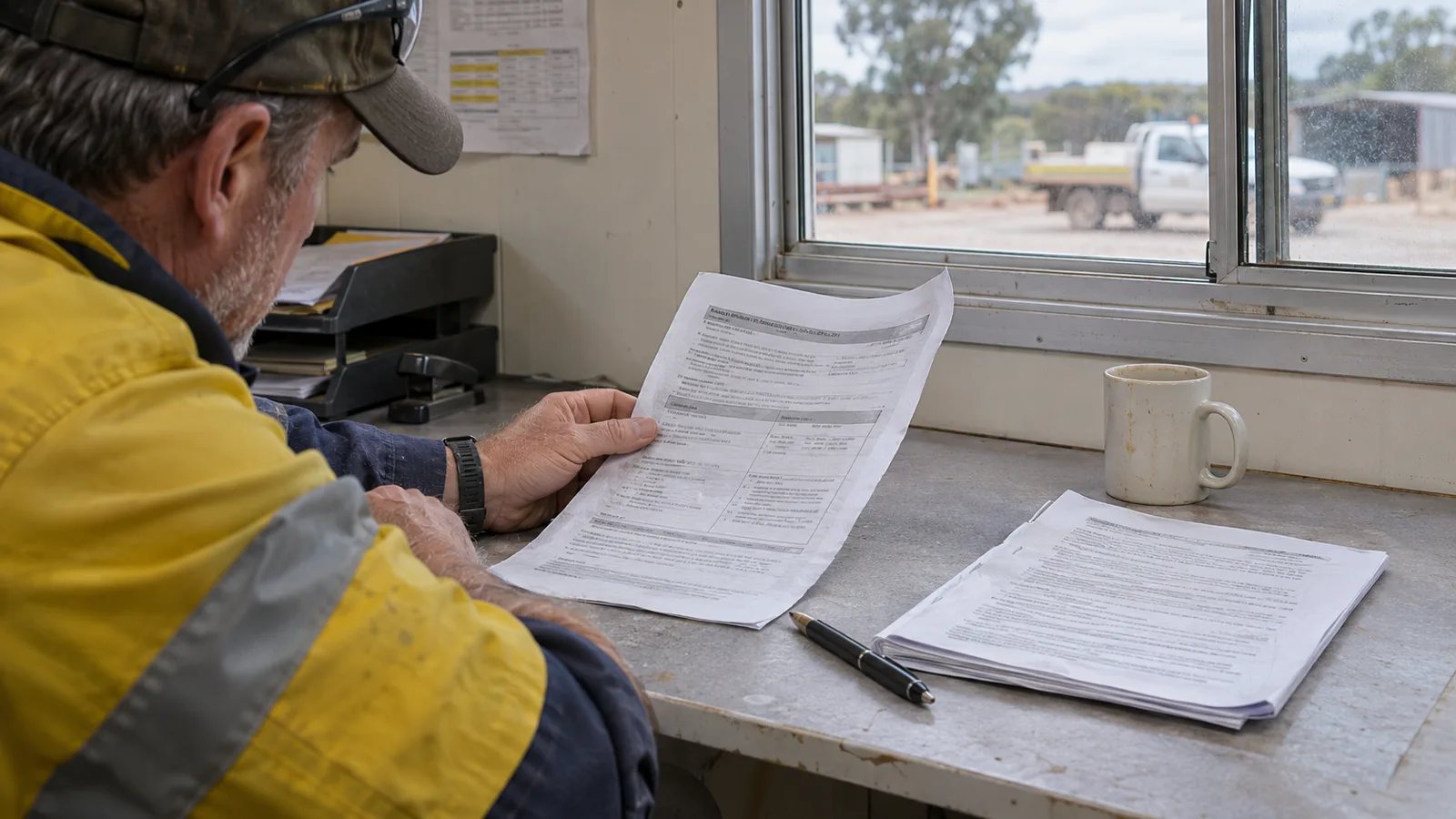
Codes of practice have always mattered in NSW. What changed on 1 July 2026 is how much.
If your business has ever treated a code of practice as "guidance we'll get to", or written a safe work method statement once and kept reusing it, this is worth five minutes.
Before 1 July 2026: admissible as evidence
Under section 275 of the NSW Work Health and Safety Act 2011, an approved code of practice has long been admissible in court proceedings as evidence of whether a duty under the Act has been complied with. A court can rely on the code to decide what is known about a hazard or risk and how to control it, and so what was reasonably practicable.
In plain terms: if something went wrong and your procedures fell short of the code, the code was the yardstick your actions were measured against. You could argue that you had used a different method that gave an equal or higher standard of health and safety, but it was up to you to show it.
Since 1 July 2026: binding
Section 26A of the Act, which commenced on 1 July 2026, goes further. A person conducting a business or undertaking (PCBU) must now comply with an approved code of practice, or manage the matter in another way that provides an equivalent or higher standard of work health and safety.
That changes when the code comes into play. It is no longer only something a court looks at after an incident. An inspector can issue an improvement notice for a breach of section 26A where you cannot demonstrate that your alternative is at least as good as the code, before anyone is hurt.
We covered the change in detail in Understanding the Upcoming Changes in NSW Codes of Practice, and what it means for psychosocial hazards in Psychosocial Hazards in NSW: Codes Are Now Binding and Inspectors Are Checking.
Your documents are your evidence
When an inspector visits, or a matter ends up in court, your safety documents are usually the first thing examined. Your SWMS, procedures, management plans, policies and risk assessments are how you show that you knew what the code expects and did it, or did something equivalent or better.
The gaps we find most often in documents are not dramatic. They are things like:
- Out-of-date references. A procedure written against an old regulation or an earlier edition of a code, still in use years later.
- Controls with no owner. "Barricade the area" or "use appropriate PPE", with nothing about who does it, when, or how anyone checks it was done.
- Generic hazards. A SWMS that lists "slips, trips and falls" but not the specific high risk work the job involves.
- Missing requirements. Steps the code expects that the document never mentions, such as consultation, emergency arrangements, supervision or review.
- Lower-order controls only. Training, signs and PPE listed as the controls, with no sign that higher-order controls were considered first.
- No review trigger. Nothing that says when the document must be reviewed, so it never is.
- Psychosocial hazards left out. Documents that cover the physical risks of a task but not the workload, isolation, fatigue or aggression that come with it.
Each of these is the kind of gap that is hard to defend as "equivalent or higher" to a code.
Check one document this week
A quick self-check for any SWMS or procedure:
- Which code or codes of practice apply to the work it covers? Does the document reflect the current edition?
- Does it name the actual hazards of this task, at this site?
- Are the controls listed from the top of the hierarchy down, and is each one specific enough that someone could check it is in place?
- Does it say who is responsible for each control, and who checks it?
- Does it cover consultation, supervision, emergencies and review?
- Would you be comfortable explaining to an inspector why it is equivalent to the code where it does something different?
If any answer is "not sure", the document needs a closer look.
Audit your documents against the codes, first audit free
Checking every document against the Act, the Regulation and the relevant codes by hand takes hours. That is why we built Orana Audit.
Upload a SWMS, procedure, policy, management plan or risk assessment as a Word or PDF file, and Orana Audit checks it against the Act, Regulation, codes of practice and guidance that apply in your state and industry, and to the work the document covers. You get a report that:
- quotes the line from your own document for every finding, checked word for word against what you uploaded
- explains what is wrong with it and what to write instead
- rates each finding by significance, so you know what to fix first
- gives you an action tracker to work through
Your first audit is free. No card and no account: upload one document and we email the report to you. After that it is $65 per document, or $250 a month for unlimited audits with an Audit Pass if you are working through a whole folder. Prices include GST.
Orana Audit tests your documents against the obligations that apply to you. It does not inspect your workplace, and it does not replace professional judgement about your own operation. If you would like that too, our team can review your WHS management system and documents with you. See our safety and risk services or contact us.
This article is general information about NSW work health and safety law as at October 2026. It is not legal advice.
Health and Safety LegislationAuditWorkplace Health and Safety