Why test?
Alcohol and other drugs, including some prescription and over-the-counter medicines, can affect a worker's judgement, coordination and reaction time. In safety-critical work such as driving, operating plant, working at heights or near live electrical equipment, that is a risk to the worker and everyone around them.
A testing program is one control among several. It works best alongside a clear fitness for work policy, supervisors who know how to respond when someone does not seem fit for work, and support for workers who need help. Some industries, such as mining, rail, transport and aviation, have specific testing requirements under their own laws.
Types of testing
- Pre-employment: before a new worker starts, usually as a condition of the job offer
- Random: unannounced testing of a randomly selected group, as a deterrent
- Post-incident: after an incident or near miss, as part of the investigation
- Reasonable cause or for cause: when a supervisor has a reasonable concern that someone may be impaired
- Return to work and follow-up: after a previous positive result or treatment, as agreed in your policy
- Blanket testing: everyone on site or in a work group, for example at the start of a shutdown
How we test
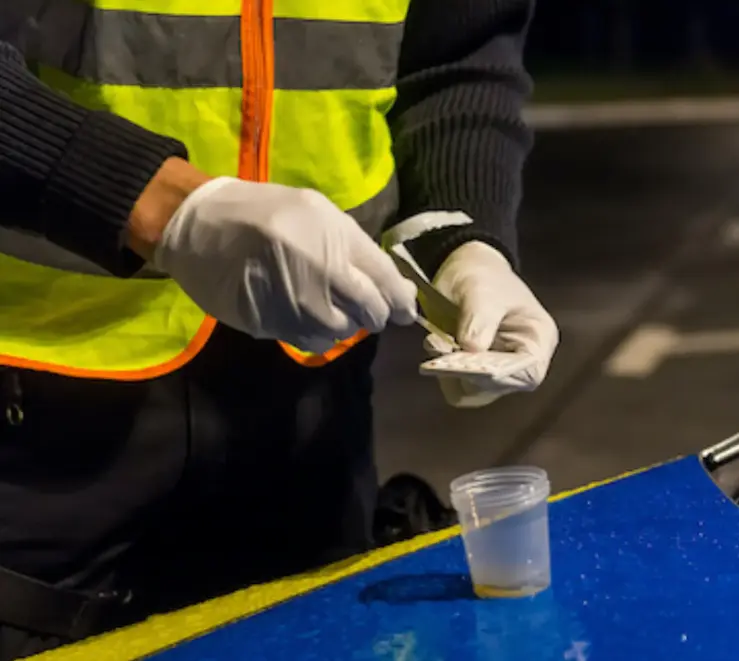
- Oral fluid (saliva) testing to AS 4760, which detects recent use and is quick and less intrusive to collect
- Urine testing to AS/NZS 4308, which detects use over a longer window
- Breath alcohol testing with calibrated breathalysers to AS 3547
- On-site screening with laboratory confirmation: an on-site screen gives a result in minutes. A non-negative screen is sent to a NATA-accredited laboratory for confirmation, under chain of custody, before it is treated as a positive result.
Every test is carried out by trained collectors, with privacy, dignity and chain of custody procedures followed throughout. Results are reported confidentially to the person nominated in your policy.
What we offer
- On-site testing at your workplace, depot or project site across Dubbo, the Orana region and regional NSW
- Scheduled random testing programs, run on the days and frequency you choose, without warning your workforce
- Call-out testing after an incident or for reasonable cause
- Pre-employment testing for new starters
- Confidential results and reports for your records
- Help writing or reviewing your drug and alcohol, or fitness for work, policy and procedure
Before you start testing
Testing should be set out in a written policy that your workers have been consulted on and understand. Your policy should cover who can be tested and when, the testing methods and cut-off levels, what happens if a worker refuses, what happens after a non-negative or positive result, privacy, and the support available. If you do not have a policy yet, we can help you write one.
The rules on workplace testing can depend on your industry, your enterprise agreement or employment contracts, and the state you operate in. This page is general information, not legal advice.
Train your own collectors
Prefer to test in-house? Our one-day course, HLTPAT010 Collect specimens for drugs of abuse testing, trains your own people to collect urine, oral fluid and breath specimens to the standards.