
Hanging Christmas Lights Safely: Ladders, Roofs and Electrical Safety
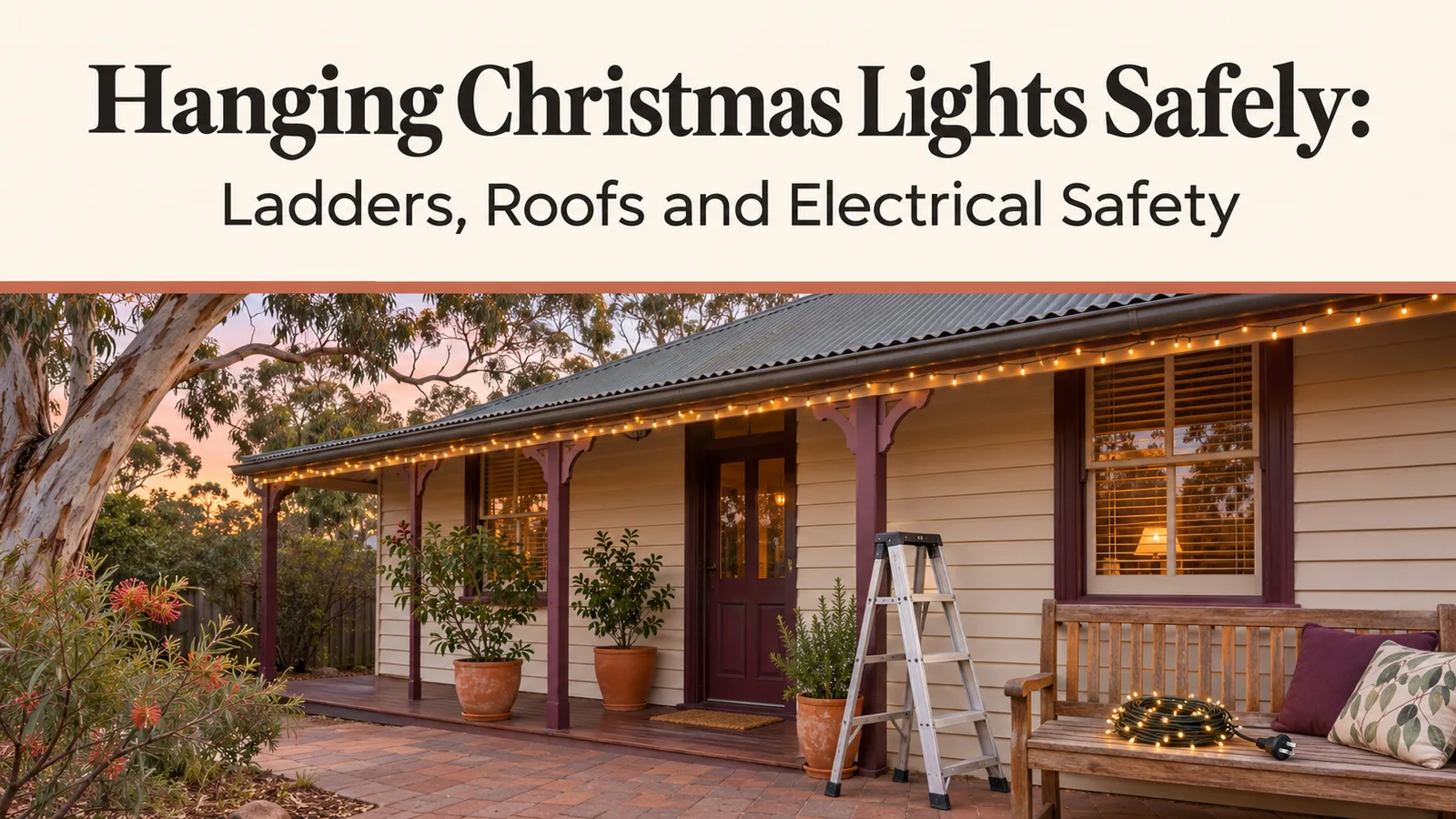
It is the week the lights go up. Houses, balconies, shopfronts, office foyers, cafes, schools, aged care homes and main streets are all being decorated, at home usually by whoever owns the ladder, and at work by whoever is on shift and happens to be tall enough.
It feels like a fun job rather than real work, and that is exactly why it goes wrong. People grab the nearest chair or ladder, stretch to reach a hook, plug a tangle of old lights into a powerboard behind the couch or the counter, and nobody thinks of it as a task that needs a plan.
Two hazards cause most of the serious harm: falling from height and electricity. Both are easy to control if you think about them before anyone climbs.
Start with the height
A fall from a ladder or a chair onto a hard floor can cause a head injury, broken wrists or a broken hip, even from a low height. The first question is not "which ladder?" but "does anyone need to climb at all?"
- Decorate at ground level where you can. Low displays, window decals, freestanding trees and lights wrapped around railings at waist height all look good and need no ladder.
- Use tools that keep feet on the floor. Pole hooks and extension poles can hang lights and garlands on high hooks from the ground.
- Leave hooks and fixings in place. Permanent hooks or clips at the right height make next year's job quicker and safer.
If someone does need to work at height:
- Use the right ladder, not a chair, box, bin, shelf or trolley. A platform ladder with a handrail is much more stable than a step ladder for reaching up and working with both hands.
- Check the ladder before using it. It should be rated for work use, clean, with no cracked or bent rails, missing feet or loose rungs.
- Set it up properly. On firm, level ground, fully opened and locked, away from doorways and walkways (or with the door locked and the area blocked off).
- Keep three points of contact when climbing, and do not stand on the top step or the top rungs.
- Do not overreach. Keep your belt buckle between the rails. Climb down and move the ladder instead.
- Have someone with you. A second person can steady the ladder, keep people, children and pets away, and pass up lights so the climber is not carrying them.
- Do not climb if you are unwell, dizzy, tired or have been drinking, and take care in the heat, especially outdoors in the middle of the day.
Roofs, gutters and awnings are a different job
Hanging lights along a roofline, gutter, shop awning or high facade is not a quick ladder task. Fragile roof sheeting, roof tiles that crack or slip, skylights, unprotected edges, ladders resting on gutters and overhead powerlines are all in play.
At home: the safest option is to keep the lights below the gutter line, along fences, railings, trees and garden beds, or to use lights that clip on from a ladder at a low height. If you really want the roofline done, think about paying someone who does this work and has the equipment. If you do climb, never do it alone, never work on a wet or hot roof, never lean a ladder against a gutter without a stand-off, and do not let anyone climb who has had a drink.
At work: use an elevated work platform operated by someone trained and licensed where required, or get a contractor who does this work and has the right equipment and fall protection. Never send a staff member onto a roof or awning to hang decorations.
Stay well clear of overhead powerlines, including the line that runs from the street to the building. Metal ladders, poles and strings of lights can all conduct electricity, and contact or even getting too close can kill. If the job brings anyone or anything near a powerline, stop and talk to your electricity network or a licensed electrician first.
Then the electricity
Old lights, outdoor use, hot weather and overloaded powerboards are a risky mix.
- Inspect every set of lights before it goes up. Throw out anything with cracked or melted sockets, exposed or frayed wires, broken plugs, or water inside. If in doubt, throw it out.
- Use lights made for where they are going. Lights and leads used outside must be labelled as suitable for outdoor use. Indoor lights should stay indoors.
- Use a safety switch (RCD). Make sure the circuit is protected, or use a portable RCD. Test it before the season starts.
- Do not overload powerboards or join powerboards together. Plug into a wall outlet where you can, and do not run a whole display through one double adaptor.
- Keep connections dry and off the ground, away from garden beds, sprinklers, gutters and puddles.
- Do not run leads across walkways or under mats, or through doors and windows where they can be crushed or become a trip hazard.
- Switch off and unplug before hanging, adjusting or removing lights, not just at the end of the day.
- Turn decorations off when you go to bed or leave, unless they are designed and installed for overnight use, and keep lights away from curtains, paper decorations, dry trees and anything that can catch fire.
- At work, include decorations in your electrical checks. If your workplace has portable electrical equipment tested and tagged, Christmas lights and the leads and powerboards used with them should go through the same process.
A quick checklist before anyone climbs
- Can this be done from the ground instead?
- Right ladder or platform, checked and set up on firm level ground
- A second person to steady, pass up and keep the area clear
- Roof, gutter, awning or near powerlines? Keep the lights lower, or use a contractor or a work platform
- Every set of lights inspected, rated for indoor or outdoor use as needed
- Safety switch protection, no overloaded or joined powerboards
- Leads kept dry, off walkways and out of doorways
- Power off before hanging, adjusting or taking down
And remember it all again in January, because taking the decorations down carries exactly the same risks, usually with fewer people around.
Training for your team
If you look after a workplace, our free Working at Heights Awareness course covers ladders, edges and planning work at height, and our free Electrical Safety Awareness course covers leads, powerboards, safety switches and what to do if someone gets a shock. Both take under an hour and give a certificate at the end. For shop and hospitality teams, Retail Worker Safety Awareness and Slips, Trips and Falls Awareness are also free.
If your team needs accredited working at heights training or first aid training before the busy season, contact us.
Want to keep up to date with WHS news? Subscribe to our mailing list
Workplace Health and SafetyWorking at HeightsElectrical Energy