
Summer Casuals and School Leavers: Keeping Young and New Workers Safe Over the Busy Season
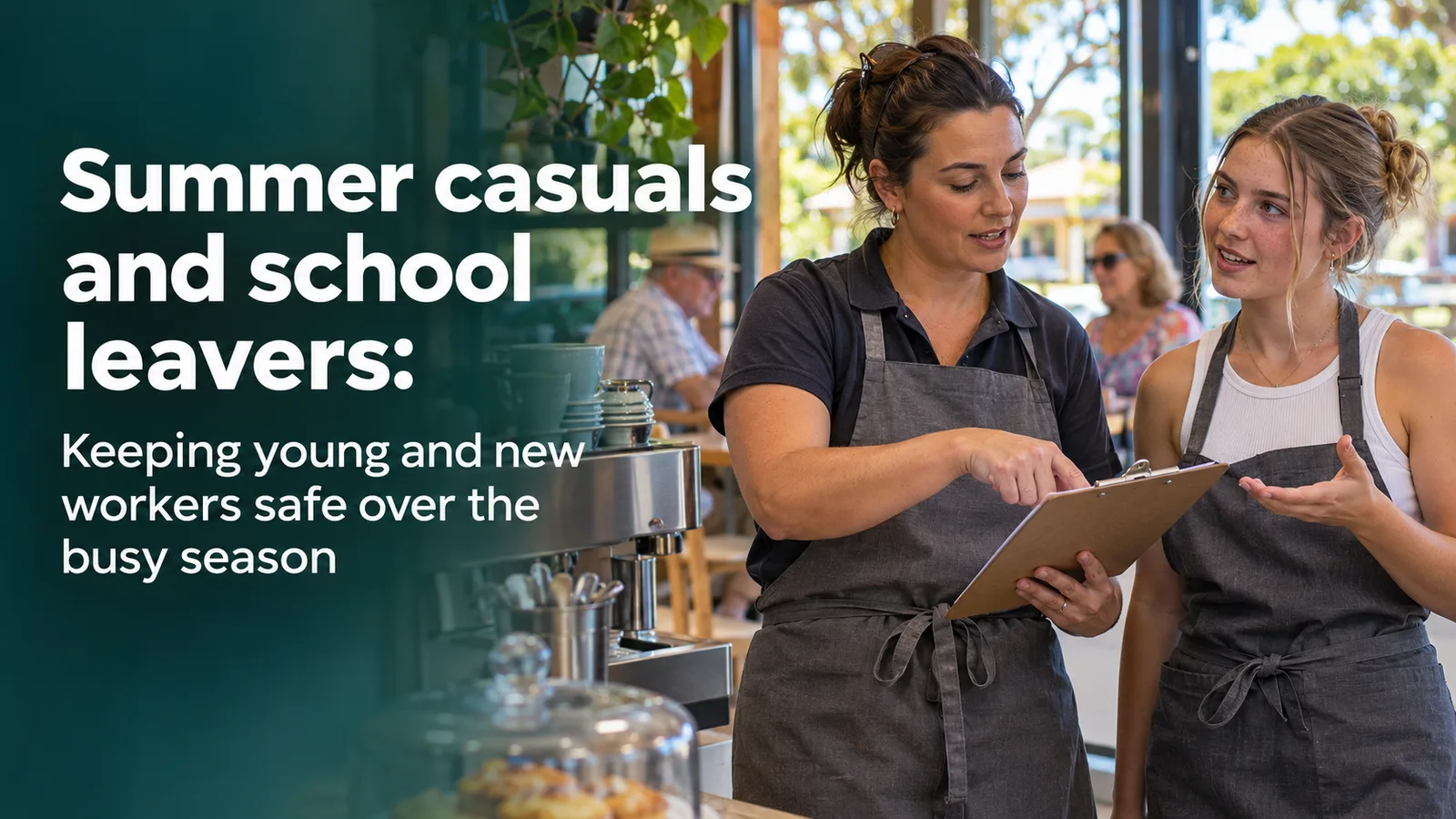
Year 12 is over. Across the country, school leavers and uni students are starting summer jobs in shops, cafes, kitchens, warehouses, distribution centres and on farms. They are arriving at exactly the moment those workplaces are at their busiest, shortest staffed and most rushed.
For a supervisor, that is a hard combination. You need the extra hands, and you need them working quickly. But young and new workers are most likely to be hurt in their first few weeks in a job, and the end-of-year rush is when the usual checks are most likely to be skipped.
The good news is that most of what keeps a new starter safe costs very little: a proper start, close supervision of anything risky, and making it easy to ask.
Why the first few weeks matter most
A new worker does not yet know what they do not know. They have not seen the slicer jam, the stack of cartons lean, or the forklift reverse out of the aisle without looking. Everything is unfamiliar, so they cannot tell the normal from the dangerous.
Young workers add a few more pressures:
- They want to make a good impression. Many will say yes to anything rather than admit they are unsure, and will not ask a question twice.
- They often do not know their rights. Many do not realise they can refuse unsafe work, or that they should report an injury, however small.
- They copy what they see. If the experienced staff take shortcuts, so will the new starter, without knowing why the rule was there.
- They may be doing several jobs. Casual shifts on top of study, sport or a second job can mean long days and little sleep.
None of this is about young people being careless. It is about being new to the job, and it applies to any worker who is new to your site, including older people returning to work for the season.
Give them a real induction, not a quick tour
The busiest week of the year is when the induction is most likely to shrink to "here is the staff room, here is the roster". Before their first proper shift, every new starter should know:
- where the emergency exits, assembly area, first aid kit and fire equipment are, and who the first aider is on their shift
- who their supervisor is on every shift, and who to ask if that person is busy
- how to report a hazard, an injury or a near miss, and that you want them to
- what they must not do yet: the equipment they are not trained on, the areas they should not go into, the tasks that need someone else
That last point is the one most often missed. A clear "not yet" list protects a new worker far better than a long list of rules they will not remember.
Keep it short and practical, and write down that it happened. Ask them to show you where the exit is, rather than asking "any questions?".
Show them, watch them, then let them do it
For anything with real risk, telling is not enough. Use a simple sequence:
- Show them how the task is done safely, explaining why each step matters.
- Watch them do it, and correct them on the spot.
- Let them do it on their own only once you are confident, and keep checking in.
The tasks that deserve this most over summer include:
- lifting and carrying: stock deliveries, kegs, flour bags, boxes from high shelves
- knives, slicers and hot equipment in kitchens and delis
- ladders and step platforms for stocking shelves
- trolleys, pallet jacks and moving vehicles in back docks and warehouses
- cleaning chemicals, which are often handed to the newest person on the shift
- cash handling and closing alone, where the risk is aggression rather than injury
Never let a new or young worker operate equipment that needs a licence or specific training, such as a forklift, however short-staffed you are.
Make speaking up easy
The most useful thing you can say to a new starter is: "If you are not sure, stop and ask me. I would much rather you asked." Then make it true by not sighing when they do.
A quick check-in at the start or end of each shift ("Anything you were unsure about today?") picks up problems while they are still small. Pair new starters with a patient, experienced worker where you can, and choose that person carefully, because they will pass on their habits along with their knowledge.
Watch the hours, the fatigue and the pressure
The end-of-year rush brings long trading hours, late closes and early starts. Keep an eye on:
- back-to-back shifts and late finishes followed by early starts
- young workers' total hours, including what they may be working elsewhere
- getting home safely after a late close, especially on public transport or walking to a car park
- customer pressure. Aggressive or abusive customers are more common in December, and young staff are often on the front counter. Make sure they know they can walk away and get a supervisor.
Bullying and harassment
Young and casual workers are more exposed to bullying, initiation "jokes" and sexual harassment, and they are the least likely to report it. They may not know it is not normal, or may worry about losing shifts.
Tell them plainly at the start that this behaviour is not acceptable at your workplace, who they can tell if it happens, and that speaking up will not cost them their job. Then make sure the people who might be doing it hear the same message.
A quick checklist for the first shift
- Induction done and recorded, including the "not yet" list
- They know who their supervisor is on every shift
- Risky tasks shown, watched and signed off before they work alone
- They know how to report hazards, injuries and incidents
- Hours and shift patterns checked for fatigue
- Plan for getting home safely after late shifts
- Clear message that bullying and harassment are not tolerated, and how to report it
Training for your team
Our free Retail Worker Safety Awareness, Hospitality Worker Safety Awareness and Manual Handling in Retail and Hospitality courses each take under an hour and give every worker a certificate when they finish. They are a good thing to ask new starters to complete before, or during, their first week. Our free Sexual Harassment and Bullying at Work course is worth doing for the whole team.
For supervisors and team leaders, Supervising Young Workers covers induction, supervision and the extra duties that come with employing young people. If you are taking on school students for work experience over summer, our free Supervising Work Experience Students and Interns Awareness course is a good place to start.
If you would like help with your induction process or first aid training for your team before the busy season, contact us.
Want to keep up to date with WHS news? Subscribe to our mailing list