Workplace Exposure Limits Start 1 December 2026: What Changes and What to Do Now
On 1 December 2026, the workplace exposure standards (WES) for airborne contaminants are replaced by workplace exposure limits (WEL). If your workers create or breathe dust, fumes, vapours or gases, this is the moment to check your controls and your monitoring results against the new list, not the old one.
Safe Work Australia describes the change as mainly one of name. For most substances that is true. For some, the number has changed, a handful of new substances have been added, and the way carcinogens are treated has changed. Here is what you need to know, and what to do in the next three weeks.
What changes on 1 December 2026
- The list changes. Until 30 November 2026 you must keep exposure below the workplace exposure standards. From 1 December 2026 the duty is to make sure no person at the workplace is exposed above the workplace exposure limit.
- Some limits change. Following Safe Work Australia's review, the limits for a number of chemicals have been revised and new chemicals have been added to the list.
- Carcinogen notations go. The old list flagged substances that cause, or are suspected of causing, cancer. Those notations are not carried into the new list.
- No numbers for non-threshold genotoxic carcinogens. These are substances for which there is no known safe level of exposure. From 1 December 2026 they have no exposure limit at all. You must eliminate them, substitute something safer, or reduce exposure as far as reasonably practicable.
- Six prohibited substances are dropped from the list, because they cannot be imported, made or used in Australia anyway.
The duty to monitor does not change: if you are not certain, on reasonable grounds, that the air is below the limit, you must carry out air monitoring.
The limits most likely to affect you
- Welding fume. The limit for welding fumes (not otherwise classified) is already 1 mg/m³ averaged over eight hours, down from 5 mg/m³. If your fabrication shop has not monitored since the cut, your last results were measured against a limit five times higher.
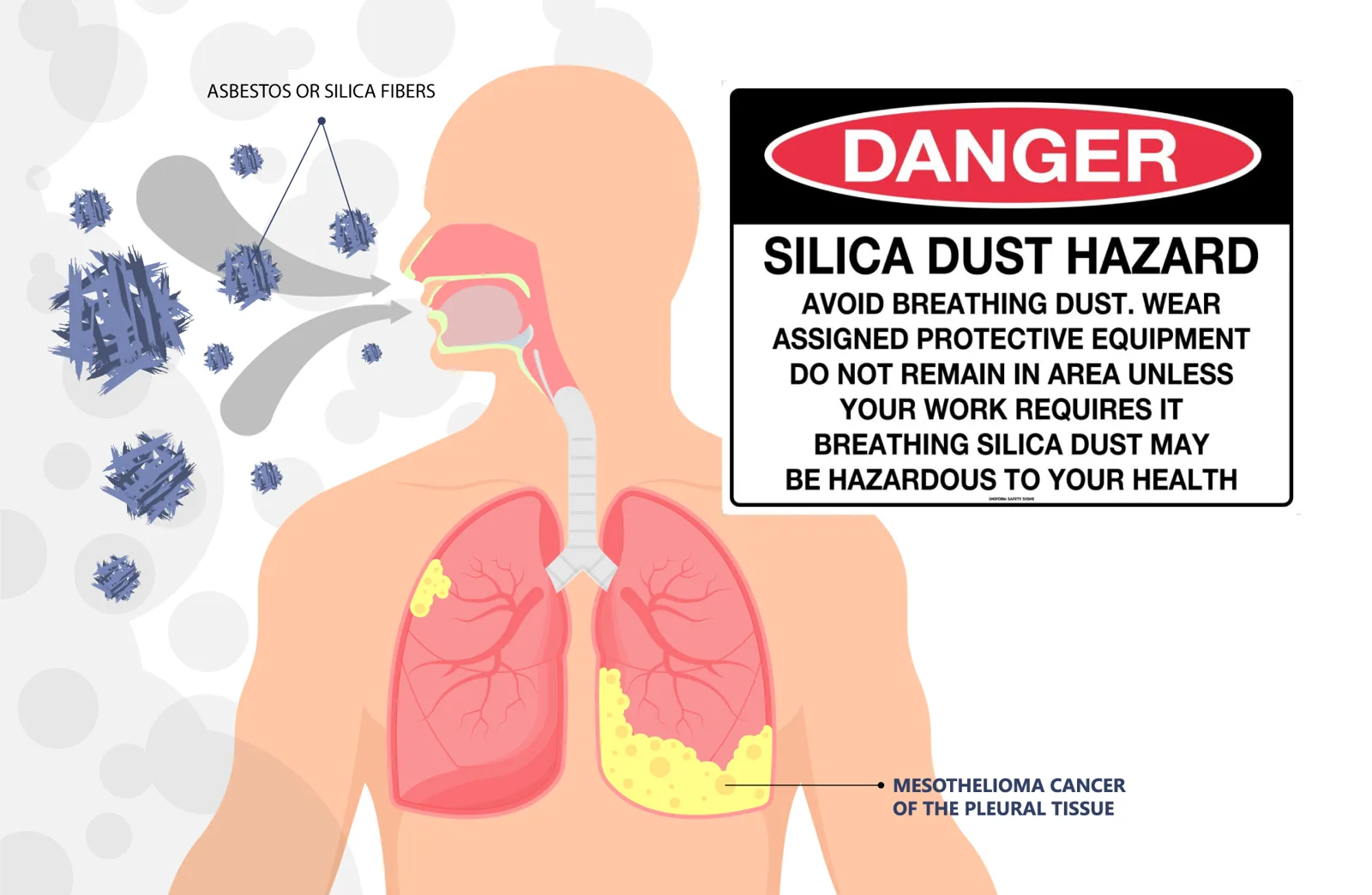
- Respirable crystalline silica. The limit stays at 0.05 mg/m³ over eight hours on 1 December. A lower limit of 0.025 mg/m³ has been proposed, and in June 2026 WHS ministers asked for more analysis before deciding. Silica work also has its own rules, including the ban on engineered stone benchtops from 1 July 2024.
- Diesel particulate matter. A new national limit applies from 1 December 2026. Victoria is phasing it in with an interim limit for most industries until 2029, so check which value applies to you.
- Benzene. WHS ministers have agreed to cut the benzene limit to 0.2 ppm over eight hours from 1 June 2027, so it is on a later timetable than the rest of the list.
This is general information, not the full list. Check every substance you use against the official Workplace exposure limits for airborne contaminants list.
Does it apply in my state?
The new list only becomes law as each jurisdiction puts it into its own WHS or OHS regulations, so confirm the position with your regulator. Victoria, which has its own OHS laws, has made amending regulations: most limits apply there from 1 December 2026, with transitional arrangements for 15 substances until 30 November 2029.
A limit is not a target
An exposure limit is the line you must not cross, not a safe level to aim for. Your duty is still to eliminate the exposure so far as is reasonably practicable, and if you cannot, to minimise it. Being under the limit does not mean the risk is controlled.
That means working down the hierarchy of control, starting at the top:
- Eliminate the process or the substance.
- Substitute something less hazardous, such as a lower-silica product or a different welding process.
- Isolate the work, in an enclosed booth or a separate area.
- Engineer the dust or fume out of the air: on-tool extraction, local exhaust ventilation, wet cutting.
- Administrative controls: rotation, work method, housekeeping, exclusion zones.
- PPE: properly selected, fit-tested respiratory protection, as the last line of defence.
And remember the test for any control: a control must change the risk, and someone must be able to check it. An extraction unit that is switched off, a wet saw with no water, or a respirator that has never been fit-tested is not a control.
Your checklist before 1 December
- List the airborne contaminants your work creates or uses: dusts, fumes, vapours, mists and gases. Include contractors' work.
- Check each one against the WEL list. Note any whose limit has fallen, any newly listed, and any non-threshold genotoxic carcinogens that now have no limit.
- Review your air monitoring results against the new limits. Results that passed under the old standard may not pass now.
- Book monitoring where you have none, where it is out of date, or where the limit has changed.
- Check health monitoring. Some hazardous chemicals, including crystalline silica, require health monitoring. Make sure the right workers are enrolled.
- Update your risk assessments, hazardous chemicals register and safe work procedures so they quote the new limits.
- Check your controls are actually working: extraction maintained and tested, water on the saw, respirators fit-tested and worn.
- Consult your workers and Health and Safety Representatives about any changes, as the law requires.
- Tell your people. A short toolbox talk is the quickest way to explain what has changed and why the controls matter.
How we can help
Our toolbox talk packages give your supervisors a ready-to-run 20 to 30 minute session, with slides, a facilitator guide, an attendance record and an optional assessment:
- Crystalline Silica Awareness
- Hazardous Chemicals Awareness
- Hot Work Awareness, including welding fume
- Personal Protective Equipment Awareness
We also run crystalline silica awareness training in person, and can review your hazardous chemicals register, monitoring results and controls as part of our safety and risk services. Contact us to talk it through.
This article is general information about Australian WHS and OHS laws as at November 2026. It is not legal advice. Check the current official list and your regulator's guidance for your jurisdiction.
Health ManagementHealth and Safety LegislationRespirable Crystalline Silica (RCS)Workplace Health and Safety