
Heat in Disability and Aged Care: Keeping Clients and Support Workers Safe This Summer
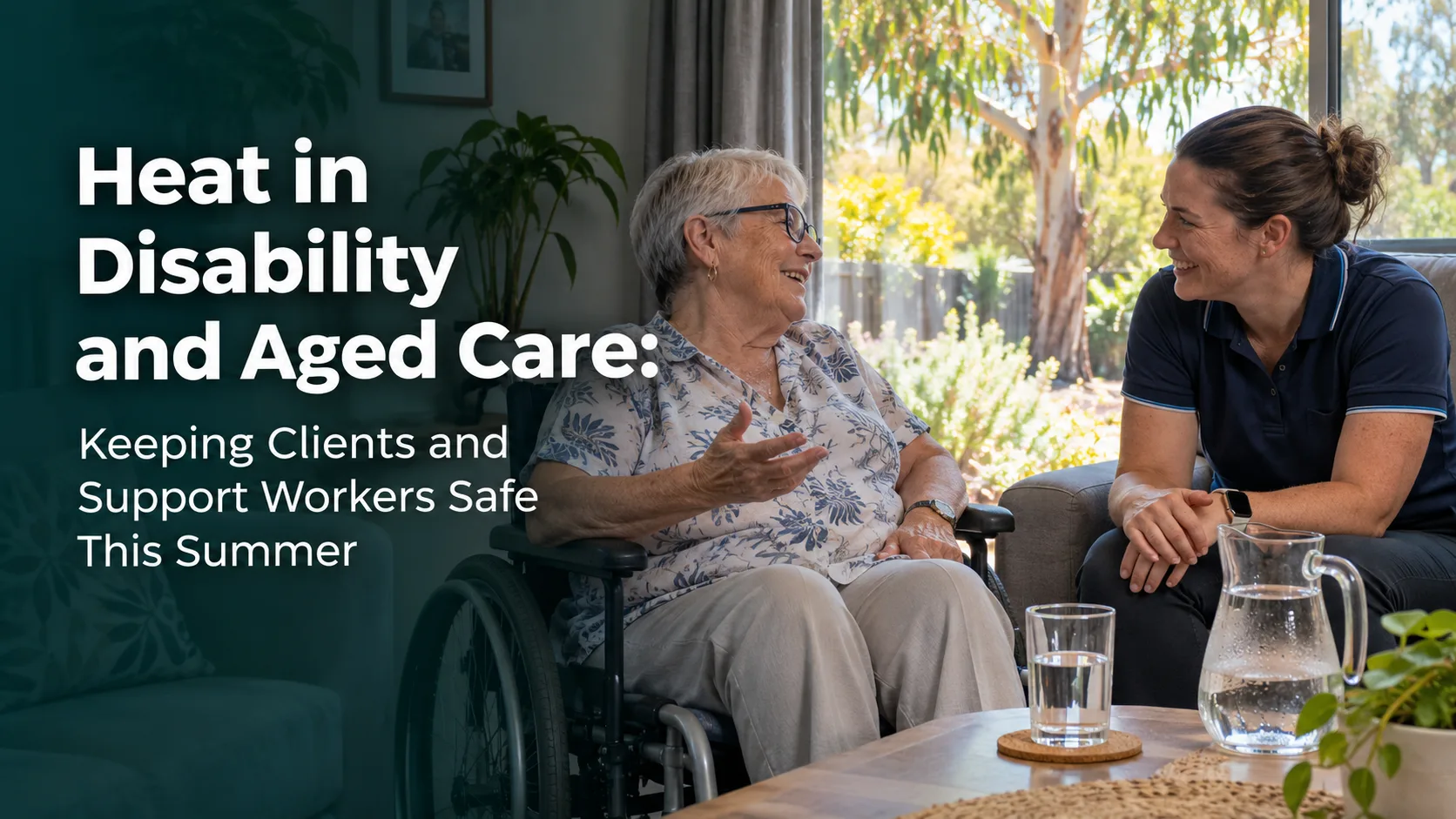
Last week we wrote about getting your workplace ready for working in heat. For disability and aged care providers, there is a second half to the job. The people you support are often more at risk in the heat than your staff, and many of them cannot tell you they are too hot, or do anything about it themselves.
Heat planning in care has to cover both: the client's health and safety, and your support worker's.
Why the people you support are at higher risk
Many clients have more than one reason to be vulnerable in hot weather:
- Age: older people feel thirst less and their bodies cool down less well.
- Medications: some common medicines, including some for blood pressure, mental health and epilepsy, affect how the body handles heat or fluid. Check with the client's GP or pharmacist, not a list on the internet.
- Communication: a person who is non-verbal, has dementia or has a cognitive disability may not be able to say they are hot, thirsty or unwell. Changes in behaviour may be the first sign.
- Mobility: someone who cannot move to a cooler room, open a window, take off a layer or get a drink depends entirely on the people around them.
- Health conditions: heart, kidney and breathing conditions, diabetes and obesity all add to the risk.
Build heat into each client's plan
The best time to plan is before the first hot week, client by client:
- Identify higher-risk clients and note it in their support or care plan.
- Record what helps them stay cool: drinks they like, fans or air conditioning, how they show they are uncomfortable.
- Check fluid needs with their health team, especially for anyone on a fluid restriction. More water is not always the right answer.
- Plan the hot days: which outings get moved, which shifts need extra checks, who to call if the person becomes unwell.
- Tell the family and other providers what the plan is, so everyone is doing the same thing.
Hot homes, outings and vehicles
In the home. Support workers often work in homes with no air conditioning, or where the client or family controls it. On hot days, check the room temperature, offer drinks regularly, close blinds on the sunny side, and know what to do if the home is too hot for the client or the worker to stay safely.
Community outings. Reschedule outdoor activities to the cooler parts of the day, or swap them for indoor ones. Take water, shade and sun protection, and keep outings short when it is hot.
Vehicles. Cars heat up very quickly, even with the windows down. Never leave a client in a parked car, even for a minute. Cool the car before the client gets in, and remember support workers driving between visits are exposed too.
Look after your support workers as well
Support workers face the same heat risks as any other worker, often while working alone:
- Personal care, transfers and manual handling are hard physical work in a hot house.
- Back-to-back visits in a hot car leave little time to drink, cool down or rest.
- New and returning staff, and staff who have just arrived from cooler places, need time to get used to the heat.
- A worker who is visiting alone has no one to notice if they start to get heat illness.
Give workers water and the time to drink it, build cool-down time into rosters on hot days, and make sure your check-in arrangements for workers on their own still work in a heatwave. Workers should know they can stop and raise a concern if a home is too hot to work in safely.
Know the signs, and what to do
Heat illness can start with tiredness, headache, dizziness, cramps, nausea or confusion. In a client who cannot tell you, look for flushed or very pale skin, being unusually drowsy or agitated, drinking or eating less, or less urine than usual.
If someone shows signs of heat illness:
- Move them somewhere cooler, out of the sun.
- Cool them down with a fan, wet cloths or cool packs, and loosen tight clothing.
- Give sips of water if they are alert and can swallow safely. Follow their mealtime plan if they have one.
- Call triple zero (000) if they are confused, collapse, have a seizure, stop sweating or are getting worse. Heat stroke is a medical emergency.
- Stay with them, and report it as your organisation's incident process requires.
Your heat checklist for care teams
- Identify higher-risk clients and update their plans.
- Check fluid advice with health teams for anyone on a restriction.
- Decide which outings and activities change on hot days.
- Review rosters for hot-day breaks and travel time.
- Check your arrangements for staff working alone.
- Brief your team on the signs of heat illness and what to do.
- Make sure your first aiders and first aid kits are ready for heat illness.
Training for your team
Our free Working in Heat Awareness course takes about 30 minutes and gives each worker a certificate when they finish. For care teams, it sits well alongside our free Home and Community Visit Safety Awareness, Dementia Awareness for Support Workers and Medication Management in Disability Support courses. Team leaders can take Supervising Care Workers in the Community, which covers check-ins and wellbeing for workers visiting homes alone.
For the paperwork, our Heat Stress Management Pack gives you a heat procedure, risk assessment, acclimatisation plan and hot day checklist, ready to edit.
If you would like first aid training for your team before summer, or help with your heat plan, contact us.
Want to keep up to date with WHS news? Subscribe to our mailing list