What Do I Need in a First Aid Kit? A Workplace Guide
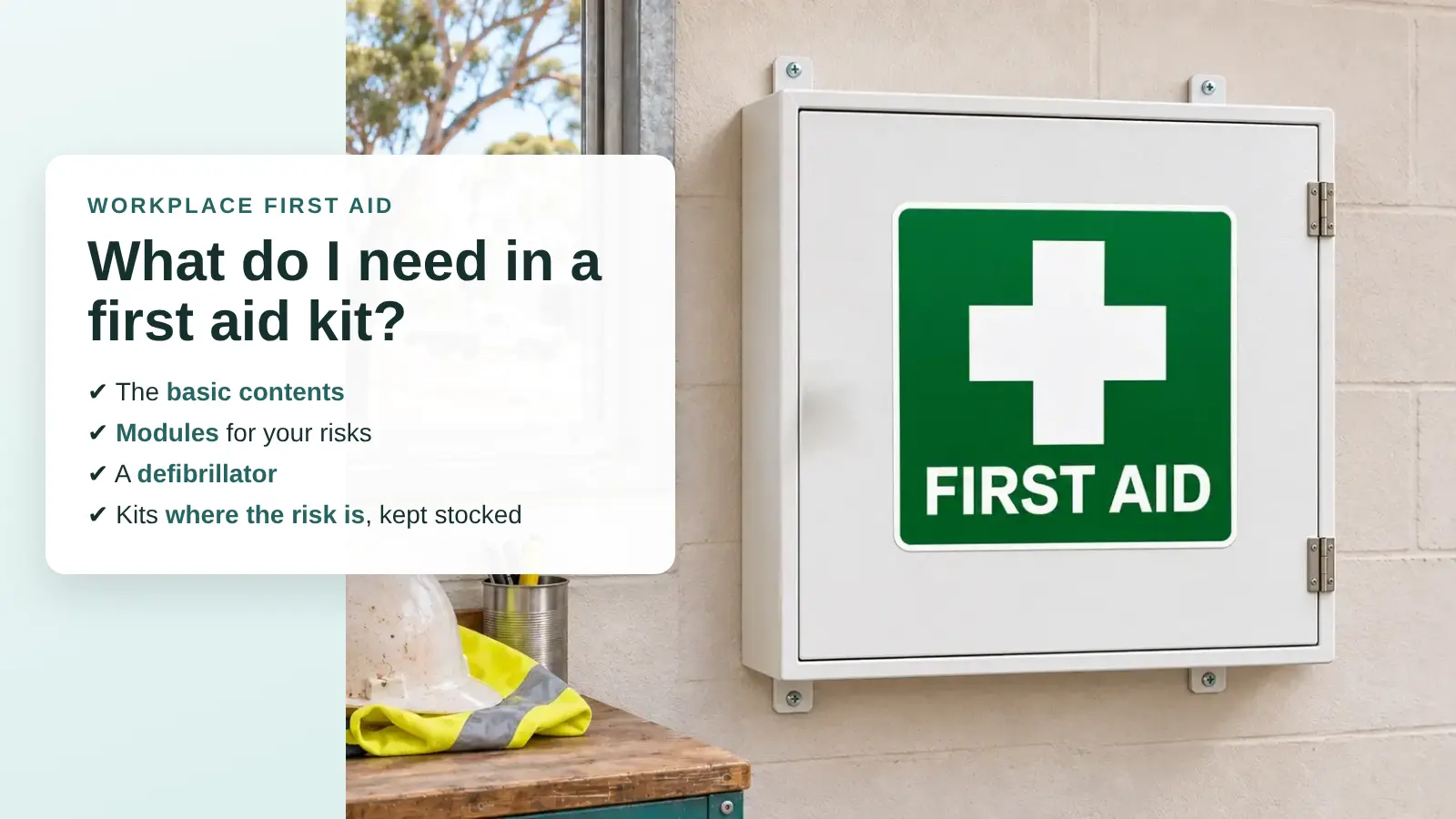
Every Australian workplace needs a first aid kit, but there is no single kit that suits every workplace. A basic kit covers the everyday cuts, burns, sprains and eye injuries. Then you add what your own risks call for: an eye or burns module, a snake bite kit for field crews, a trauma kit where serious bleeding could happen, and a defibrillator. Here is what goes in, what to add, and how to keep it ready.
Start with your first aid needs assessment
The model Code of Practice on first aid in the workplace asks you to work out your first aid needs from your own risks: the work you do, the hazards, how many people are at the workplace, how far you are from medical help, and the health of your workers. Your kit should follow from that, not from what happened to be on the shelf at the hardware store.
If you haven't done a first aid needs assessment yet, start there. Our earlier article, Complying with the First Aid Code of Practice, explains how.
What goes in a basic first aid kit
The code of practice lists recommended contents for a basic workplace kit. Grouped by what they are for, a basic kit should hold:
For first aid and protection
- Instructions for giving first aid, including a CPR flow chart
- A resuscitation face mask or face shield
- Disposable gloves
- A notebook and pen to record what was done
For cleaning wounds
- Sterile saline
- Wound cleaning wipes
- Gauze pieces
For cuts and grazes
- Adhesive dressing strips in assorted sizes
- Non-adherent wound pads in small, medium and large sizes
- Wound dressings and a combine pad for larger wounds
- Non-stretch adhesive tape
- Splinter probes and tweezers or forceps
For sprains, strains and bleeding
- Conforming and crepe bandages
- Triangular bandages and safety pins
- An instant ice pack
For eyes and burns
- Eye pads
- Access to clean running water for at least 20 minutes for burns, or hydrogel burns dressings where running water isn't available
General
- Scissors
- An emergency (space) blanket
- Resealable plastic bags for used items
Check the code of practice that applies in your state or territory for the full list and suggested quantities, and size the quantities to the number of people the kit serves.
Add modules for your risks
A basic kit is the minimum. Your needs assessment will tell you what to add:
| If your work involves… | Consider adding |
|---|---|
| Chemicals, dust, grinding or cutting | An eye module, and an eye wash station at the point of risk |
| Hot work, kitchens, hot surfaces or electricity | A burns module with hydrogel dressings |
| Outdoor or remote work | A remote or outdoor module: snake bite (pressure immobilisation) bandages, extra water, sunscreen, a way to call for help |
| Machinery, cutting, sharp tools or vehicles | A trauma kit for serious bleeding, kept where the risk is |
| Workers with known conditions such as asthma or severe allergies | An asthma kit or an adrenaline auto-injector, as your assessment and the worker's health plan suggest |
| Heat | Cold packs and the means to cool someone quickly. See our working in heat guide |
Don't forget a defibrillator
Sudden cardiac arrest can happen to anyone, with no warning, and survival falls with every minute without CPR and a defibrillator. The code suggests you consider an automated external defibrillator (AED), especially where there is a risk of electrocution, where an ambulance would be delayed, or where many members of the public are present. That covers a great many workplaces. AEDs talk the user through each step, so anyone can use one.
What to leave out
Medicines such as painkillers are generally not kept in a workplace first aid kit. A first aider isn't there to diagnose or prescribe, and people can react badly to medicines. Where your assessment identifies a specific need, such as an asthma reliever or an adrenaline auto-injector, include it deliberately and make sure first aiders know how and when to use it.
Where to put your kits
A well-stocked kit is no use if it's five minutes away when someone is bleeding. Put kits:
- Where the risk is: the workshop, the kitchen, the chemical store, the hot work bay
- In every vehicle and on mobile plant, and with every crew working away from the main site
- Somewhere easy to find, with clear signs, and not locked away
- In more than one place on a large or spread-out site
Make sure everyone knows where the kits and the defibrillator are, and who the first aiders are.
Keep your kits stocked
Kits empty slowly and quietly. Someone uses the last few dressings and nobody restocks them, and the saline and burns gel pass their use-by dates. Check every kit regularly and after it's used:
- Is everything on the contents list there?
- Is anything out of date or damaged?
- Is the kit clean, dry and easy to reach?
- Has the defibrillator passed its self-check, and are the pads and battery in date?
Record each check, and record each time first aid is given.
Make it easy
- First Aid Kit Restock Service: we put a QR label on each of your kits. Workers scan it and log what they used, and we post the replacements each week, so your kits stay full without anyone remembering to check.
- First Aid Kit Checklist and First Aid Treatment Register: an editable checklist of the basic contents, modules, defibrillator and eye wash checks, and an Excel register of first aid given.
- First Aid Needs Assessment: an editable template to work out the kits, modules, equipment and first aiders your workplace needs.
- First aid training: CPR, first aid, advanced and occupational first aid, at our Dubbo training centre or at your workplace.
If you'd like help working out your first aid needs, or training for your first aiders, contact us.